The Product Life Cycle is the theoretical cycle a product will go through from introduction into the market through decline. Knowing what it is and where your product is can maximize your revenue.
The Product Lifecycle describes the four primary stages a product will evolve through within its lifetime. They are Introduction, Growth, Maturity, and Decline. A Product Extension may follow the Maturity stage, but this is not guaranteed.
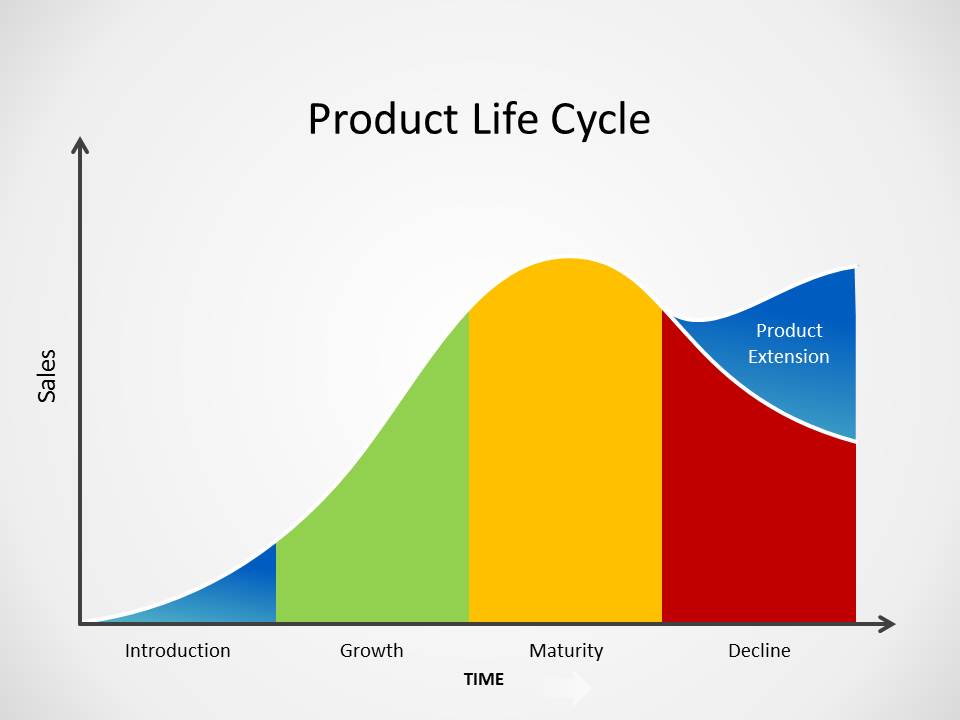
The Introduction phase is when a firm introduces a new product. Many unknowns exist within the firm behind the offering and in the general public. Within the firm, there are questions about whether it conducted the marketing for the product appropriately, if the advertising reached and influenced/inspired the right people, and whether or not consumers will see the value in the offering. The general public needs to know if the tradeoffs weigh on the side of purchasing the new offering.
In the Introduction Phase, we will find the Innovators and Early Adopters of a new offering. They are the avant-garde of the technologies/services and will: 1) be the ones who influence the next stage, and 2) can become among your most loyal customers, even if your initial offering is a Minimum Viable Product (MVP).
Think back to 2007 when the first few purchased the first iPhone. Apple marketed the iPhone as a complete game changer in the cell phone/mobile computing market. Of course, many people remained away from this “new” smartphone. Still, the few who were in at the beginning had the most significant influence on other consumers with their positive reviews of the device.
Suppose a product successfully clears the Introduction phase. In that case, a firm’s offering will move into the Growth phase when the Innovators/Early Adopters have given the offering some traction and have motivated/influenced the Early Majority to begin purchasing. It is also when you will start to see competitive offerings from rival firms attempting to enter the market with their own, sometimes better, versions and leads into the Maturity phase.
The Maturity phase is when the offering’s market becomes saturated, and there is little room for additional growth. As a result, sales will plateau at this point when the Late Majority has finally entered the space. The Maturity phase has no definitive timeline, however. It may be quick, as with novelty products/toys, or it may last for decades as a customer-favorite brand name (eg., Coca-Cola, Clorox) as an ongoing staple of the firm’s revenue stream.
Following the Maturity phase is the inevitable Decline phase. Various factors will bring on the Decline phase even to culturally loved brands or time-tested commodities (eg., Harley Davidson, Budweiser, diamonds, etc.). Millennials are responsible for the decline of many things that previous generations held dear.
So, how can understanding the product lifecycle give your business an edge? Suppose you are in the resale industry, for example. Knowing when to enter or exit a market with a product offering is critical to increasing/preserving your revenue stream. On the other hand, if you are a manufacturer, you can make better investment decisions based on what phase the offering is in the cycle.
The bottom line is to recognize where in the product life cycle your offering is, capitalize on it to the maximum extent possible, and then make a clean getaway before your company becomes emotionally involved in an offering with a declining sentiment.
Looking at you, Harley Davidson (HOG).[1] Get it together!
Afterthought: Timing any of these phases for entry and exit is more challenging than recognizing that you’re already in one. Large data sets and analytics will give you an advantage in this department. Stand by for another post!
Afterthought: Timing any of these phases for entry and exit is more challenging than recognizing that you’re already in one. Large data sets and analytics will give you an advantage in this department. Stand by for another post!
Updated on 4/28/2023 with Grammarly recommendations.
[1] Full disclosure, I ride a 2019 Harley Davidson Softail Slim as my daily commuter and absolutely love it. I want nothing more than the perpetual existence of HD, but if they don’t get their act together soon, then they’re going to go the way of the dinosaurs. Their bikes are overpriced and uncomfortable unless you shell out even more money for overpriced aftermarket accessories, if they are even available. That, and the whole retro thing only goes so far with the current generation. “Its not about you, its about the consumer.” -Joe Dir
Sources/Further Reading
Kopp, C. M. (2023). Product Life Cycle Explained: Stage and Examples. Investopedia. https://www.investopedia.com/terms/p/product-life-cycle.asp
Levitt, T. (2022, December 8). Exploit the Product Life Cycle. Harvard Business Review. https://hbr.org/1965/11/exploit-the-product-life-cycle
What Is a Product Life Cycle? Definition and Guide. (2022, November 18). Shopify. https://www.shopify.com/blog/what-is-product-life-cycle
 Christopher Padilla
You must be logged in to post a comment.