If you are interested in building wealth, then there are two key traits that are common to nearly everyone who has built a portfolio worthy of retirement.
Don’t worry, I’m not going to wait until the last paragraph or make you decipher a hidden message to get to the point. If you would like to be in a better financial position, then you have to work on two important things: 1) Self Control, and 2) Delayed Gratification.
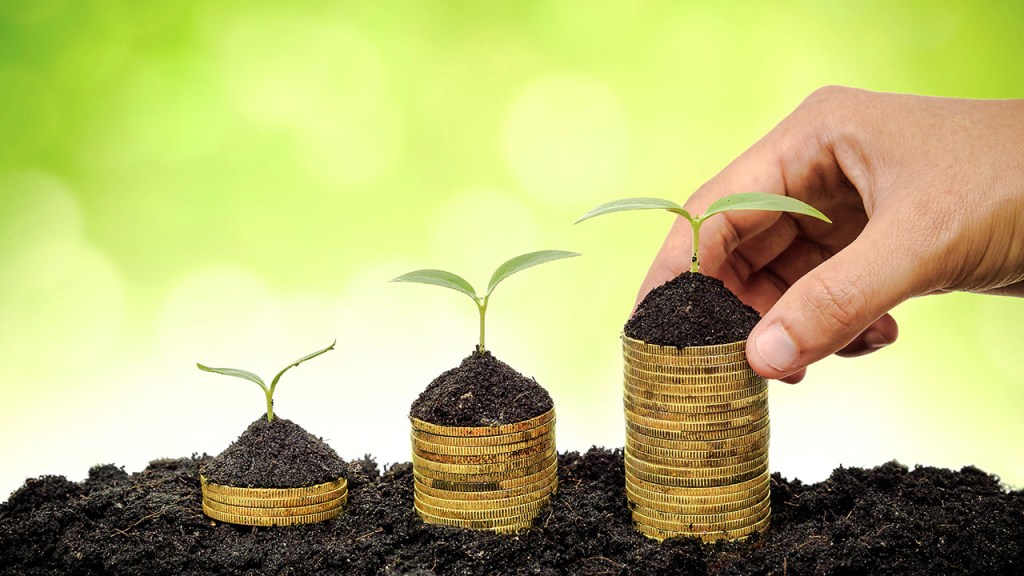
You need to be in control of every aspect of your life, but most importantly are your habits and your emotions. Bad habits and weak emotional strength get you in the fast lane to financial ruin. I think that my emotions are fairly well in check, but I have some terribly bad habits myself. In fact, sometimes I feel like I’m the target of every marketing campaign, floor design, and promotion ever conceived of.
Fortunately, modern technology has afforded me the opportunity to hedge my bad habits with automation. Whenever I get paid, I automatically transfer $20 per working day to my Cash card. For example, if I were to be paid tomorrow and there were 23 working days until I get paid again, then come tomorrow morning I would transfer $460 to the Cash app and limit myself to $20 of spending per day.
Lucky for me, I don’t spend $20 on food per day, so it has actually been adding up. When tomorrow comes, I will take whatever that remainder is and use it to invest in an ETF that tracks the S&P 500 and pretend like it no longer exists (that means that I never look at it — I don’t care about the ups and downs because I’m investing for the long haul).
- ETF (Exchange Traded Fund): “ An exchange-traded fund (ETF) is a type of security that involves a collection of securities — such as stocks — that often tracks an underlying index, although they can invest in any number of industry sectors or use various strategies. …they are listed on exchanges and ETF shares trade throughout the day just like ordinary stock.” — Investopedia
- S&P 500: The Standard and Poor 500 is an index that tracks the stock price movement of the largest 500 companies in the United States.
The reason I invest that money into an S&P 500 index fund is for a few reasons. 1) It offers immediate exposure to a variety of companies and sectors of the economy, 2) I believe in the strength of the U.S. economy and its prospects for future expansion, and 3) Because it takes the guesswork out of investing.
On average, the S&P 500 returns between 8 and 10 percent per year. For investors who are not interested or do not have the time to do their homework on individual companies, then this is a great investment. In fact, at these rates, your money will double in approximately 7 years. Continuous contributions and a long time horizon are your friends.
Of course, not all of my invested money is in the S&P 500 through the Cash app. In fact, its only a very small portion. The majority of my money is in my TD Ameritrade account and is diversified in a variety of individual stocks and ETFs.
Speaking of automation, my fiance and I have $1,000 automatically transferred to our TD Ameritrade account every month where I then direct our investments. Again, this is because I have the self-control of a 12 year old sitting in front of a dozen bags of Fun Dip. If it weren’t for the automatic transfers, I probably would have a dozen bags of Fun Dip in front of me every day.
The second thing you want to make sure that you work on is your delayed gratification. You have to be able to make your regular contributions and remember where you want to be at retirement, not where you want to be right now.
It’s very tempting to drain your investment accounts once you see it starting to grow a little bit. It’s always the same thing that runs through your mind: “It’s not that much and I’ll be able to add that money back in quick.”
You won’t. You never will. In fact, if you automated that money into your investment accounts in the first place, then it is highly unlikely that you will have enough left over after future contributions and spending to get all of that money back into your account to include the missed growth.
I know. I said the same thing when I cashed out my TSP and bought a bunch of SCUBA gear. I never put that money back in my investment accounts. After doing the math for the first time, that $7,400 would be approximately $28,101 today. Now I want to cry.
- TSP (Thrift Savings Plan): The TSP is a retirement account for military personnel. It allows the service member to allocate their money into 5 different funds (I’ll get into that in a later post).
The more information you soak up, the more you realize that its not just the high-paid workers who have great retirements. There are a lot of people who have made smart decisions, lived below their means, invested wisely, and end up doing just fine in retirement.
Risking rambling on, I’ll leave it here for now (self-control). I would like to remind you that this is free advice and it’s worth only what you paid for it.
Links To Useful Things Mentioned In This Post:
- TD Ameritrade: (https://www.tdameritrade.com/) A broker offering $0 commissions and great research tools. ($0 commission was a pretty big deal — now its standard.)
- Cash App: (https://cash.app/)
Recommended Reading (Books)
- The Power of Habit by Charles Duhigg
- Atomic Habits by James Clear
Recommended Reading (Online Articles)
 Christopher Padilla
You must be logged in to post a comment.