Are you looking for an environmentally friendly way to transport oil? Look no further than pipelines! They’re like the kale smoothie of the oil transportation world – a healthier, safer alternative to the greasy fast food of rail and truck. So before you join the anti-pipeline crowd, think twice – it might not be as black and white as you think.
The Keystone XL pipeline was a contentious project that aimed to transport over 500,000 barrels per day from Canada to Cushing, Oklahoma. While some activists celebrated the project’s cancellation as a victory against “big oil,” it’s important to note that this decision may have negative environmental consequences. Instead of being a true win, the cancellation of the Keystone XL pipeline may prove to be a symbolic one at best.
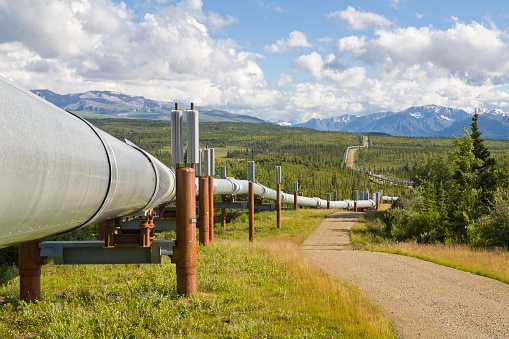
On January 20, 2021, President Biden took a step to address the climate crisis by revoking the permit for the Keystone XL Pipeline. However, it’s important to note that pipelines can be a safer and more efficient way to transport oil than other methods, such as rail or truck. They also have a lower environmental impact.
The concern with oil pipelines is the potential for rupture and oil spills, which can cause permanent damage to the surrounding environment. For example, in November 2017, the TransCanada Keystone pipeline experienced a fracture, spilling around 5,000 barrels. The company quickly detected the leak and shut down the section of the pipeline for repair.
The U.S. Department of Transportation investigation revealed that the rupture was caused by mechanical damage that occurred during the pipeline’s original construction. The report concluded that all the released product was recovered, and the accident site was restored in accordance with environmental standards.
This incident serves as a reminder of the importance of proper maintenance and safety measures for pipelines and how quickly and effectively the company responded to contain and repair the damage. It also highlights how the industry and government agencies work together to prevent and mitigate the impact of such incidents.
But is canceling the Keystone XL pipeline truly environmentalism? The answer is more complex. According to the U.S. Bureau of Transportation Statistics, pipelines are the safest medium for transporting oil. Oil pipelines accounted for only 701 accidents compared to 4,693 for highway transportation, 10,112 for waterways, and 10,376 for rail.
Data from the Pipeline and Hazardous Materials Safety Administration (PHMSA) also shows pipelines are responsible for fewer oil spills than rail. In 2019, pipelines spilled 0.4 gallons of oil per million gallons transported, while rail spilled 1.3 gallons per million. Additionally, pipelines have automatic shut-off valves and monitoring systems that can detect and respond to spills quickly, minimizing the spill’s impact.
Canceling the Keystone XL pipeline may be seen as a victory for some activists, but in reality, it will do little to stop the movement of oil. Oil will still find its way to the market through other means, such as road and rail, which are less safe or efficient than pipelines. Furthermore, the oil that would have been transported through the Keystone XL pipeline will likely be transported by other pipelines or alternative means, resulting in increased emissions from transportation. Canceling the pipeline may be a symbolic victory, but it does not address reducing oil consumption and finding sustainable energy sources.
The bottom line is that pipelines are a safer, cleaner, and more efficient way to transport oil than other methods like rail or truck. Therefore, a true environmentalist would prefer pipelines as they are safer and have a lower environmental impact than canceling pipeline projects without considering the second and third-order consequences.
Updated on 4/28/2023 with Grammarly recommendations.
 Christopher Padilla
You must be logged in to post a comment.