“The man who does not read has no advantage over the man who cannot read.”
-Mark Twain

Contagious: Why Things Catch On
What makes things popular? If you said advertising, think again. People don’t listen to advertisements, they listen to their peers. But why do people talk about certain products and ideas more than others? Why are some stories and rumors more infectious? And what makes online content go viral?
Wharton marketing professor Jonah Berger has spent the last decade answering these questions. He’s studied why New York Times articles make the paper’s own Most E-mailed list, why products get word of mouth, and how social influence shapes everything from the cars we buy to the clothes we wear to the names we give our children.
In Contagious, Berger reveals the secret science behind word-of-mouth and social transmission. Discover how six basic principles drive all sorts of things to become contagious, from consumer products and policy initiatives to workplace rumors and YouTube videos. Learn how a luxury steakhouse found popularity through the lowly cheesesteak, why anti-drug commercials might have actually increased drug use, and why more than 200 million consumers shared a video about one of the most boring products there is: a blender.
Contagious provides specific, actionable techniques for helping information spread—for designing messages, advertisements, and content that people will share. Whether you’re a manager at a big company, a small business owner trying to boost awareness, a politician running for office, or a health official trying to get the word out, Contagious will show you how to make your product or idea catch on.
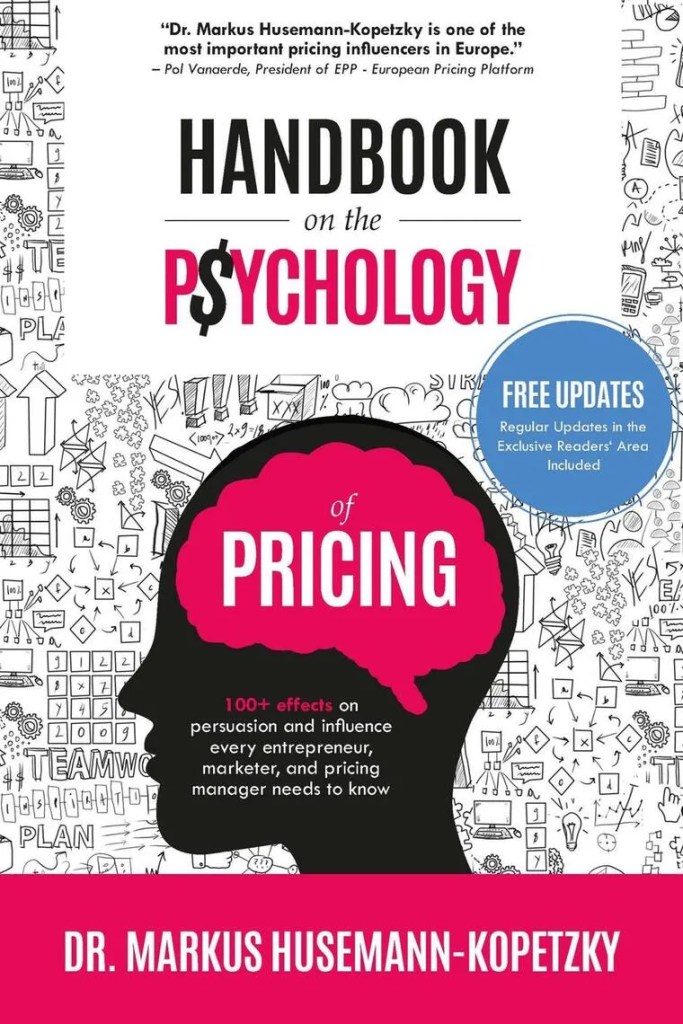
Handbook on the Psychology of Pricing: 100+ Effects on Persuasion and Influence Every Entrepreneur, Marketer, and Pricing Manager Needs to Know
How to Make Your Prices (Almost) Irresistible?
Discover the Power of Psychological Pricing.
Customers pay prices. Customers are the same human beings who process their world with predictable psychological mechanisms and mental shortcuts.
Many companies still focus only on numbers: internal costs (markup pricing), external competitors (competition-based pricing), or assume that people can objectively assess the products’ or services’ benefits they pay for (value-based pricing).
The Handbook on the Psychology of Pricing sheds light on what happens in your customers’ minds. This book presents the most comprehensive collection of psychological pricing strategies and tactics currently available. It introduces you to intriguing, hard-to-believe insights into consumer psychology, subconscious persuasion, and people’s perception of prices.
More specifically, you will
- Discover how to make your pricing more attractive and, thereby, lift sales and margins for your business.
- Learn how to increase customers’ willingness to pay for your products and services.
- Find how to reduce the attention to prices in buying decisions.
- Expand your pricing skill set and learn about more than one hundred effects unearthed from solid academic research.
This book is required reading for entrepreneurs, general and category managers, marketers, product and brand managers, pricing strategists, management consultants, and business students who are interested in adding an invaluable pricing edge to their business practice and personal pricing quiver.
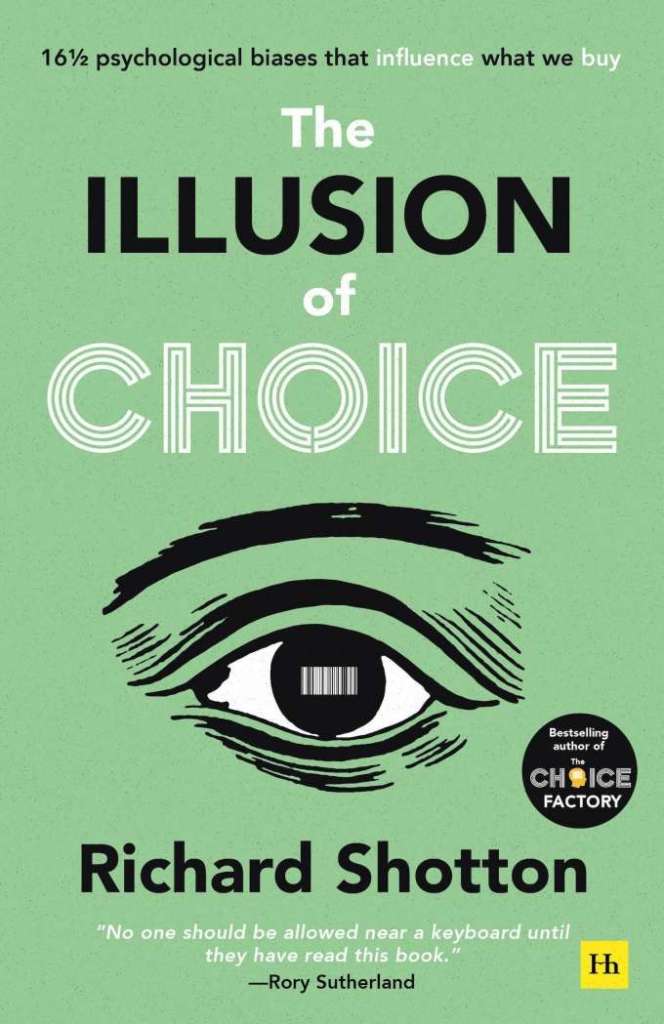
By: Richard Shotton
Purchase on Amazon
The Illusion of Choice: 16 1/2 Psychological Biases That Influence What We Buy
The compelling new book by Richard Shotton, author of The Choice Factory
Every day, people make hundreds of choices.
Many of these are commercial: What shampoo to pick? How much to spend on a bottle of wine? Whether to renew a subscription?
These choices might appear to be freely made, but psychologists have shown that subtle changes in the way products are positioned, promoted and marketed can radically alter how customers behave.
The Illusion of Choice identifies the 16½ most important psychological biases that everyone in business needs to be aware of today – and shows how any business can take advantage of these quirks to win customers, retain customers and sell more.
Richard Shotton, author of the acclaimed The Choice Factory, draws on academic research, previous ad campaigns and his own original field studies to create a fascinating and highly practical guide that focuses on the point where marketing meets the mind of the customer.
You’ll learn to take advantage of the peak end rule, the power of precision, the wisdom of wit – and much, much more.
You simply cannot afford to miss The Illusion of Choice.
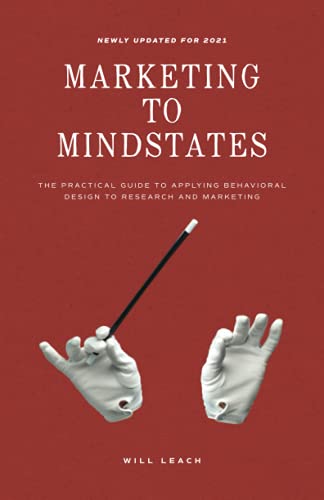
By: Will Leach
Purchase on Amazon
Marketing to Mindstates: The Practical Guide to Applying Behavioral Design to Research and Marketing
Your nonconscious mind will filter out more than 99 percent of marketing you “see” today. Traditional marketing simply doesn’t work in today’s complex world. To reach today’s customers and influence their purchases, marketers and market researchers need to understand and harness the power of applied behavior psychology and behavior economics to break through these nonconscious filters and drive purchase behaviors—a process called Mindstate Marketing. In Marketing to Mindstates, Will Leach, founder of The Mindstate Group, a leading behavior research and marketing consultancy, demystifies this nonconscious filter and explains how to bypass it, introducing readers to temporary moments of influence called mindstates. Using his Mindstate Behavioral Model, he shows you specifically how to create behaviorally optimized messaging designed to activate these mindstates and trigger real emotional engagement. With this book, researchers and marketers will finally have a practical guide to designing marketing creative that compels people to listen, care, and act.
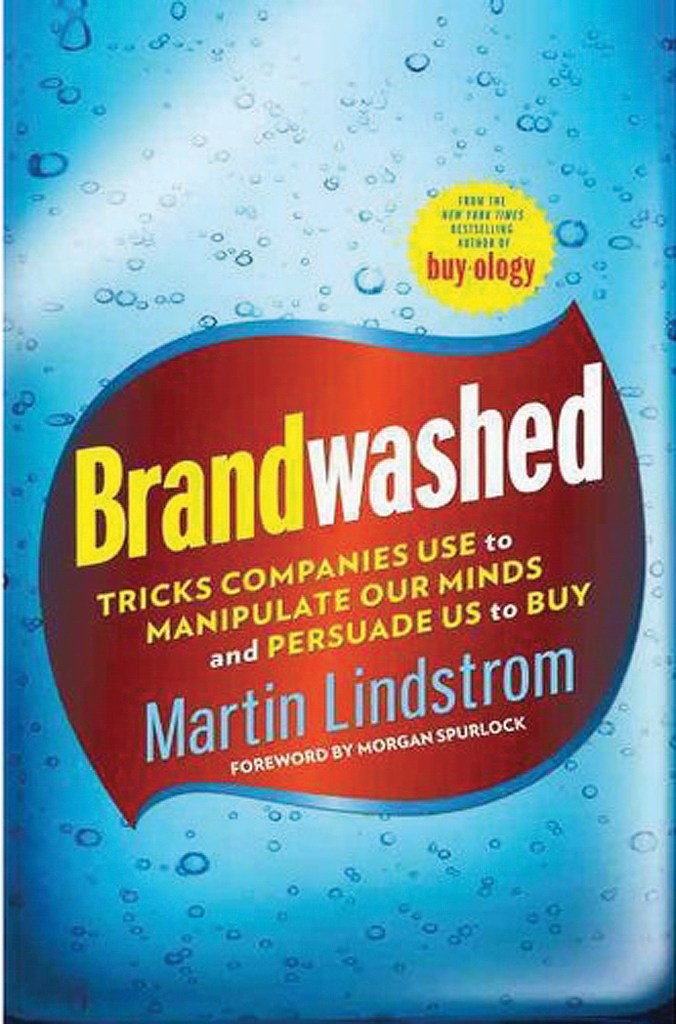
Brandwashed: Tricks Companies Use to Manipulate Our Minds and Persuade Us to Buy
From the bestselling author of Buyology comes a shocking insider’s look at how today’s global giants conspire to obscure the truth and manipulate our minds, all in service of persuading us to buy.
Marketing visionary Martin Lindstrom has been on the front lines of the branding wars for over twenty years. Here, he turns the spotlight on his own industry, drawing on all he has witnessed behind closed doors, exposing for the first time the full extent of the psychological tricks and traps that companies devise to win our hard-earned dollars.
Picking up from where Vance Packard’s bestselling classic, The Hidden Persuaders, left off more than half-a-century ago, Lindstrom reveals:
• New findings that reveal how advertisers and marketers intentionally target children at an alarmingly young age – starting when they are still in the womb!
• Shocking results of an fMRI study which uncovered what heterosexual men really think about when they see sexually provocative advertising (hint: it isn’t their girlfriends).
• How marketers and retailers stoke the flames of public panic and capitalize on paranoia over global contagions, extreme weather events, and food contamination scares.
• The first ever neuroscientific evidence proving how addicted we all are to our iPhones and our Blackberry’s (and the shocking reality of cell phone addiction – it can be harder to shake than addictions to drugs and alcohol).
• How companies of all stripes are secretly mining our digital footprints to uncover some of the most intimate details of our private lives, then using that information to target us with ads and offers ‘perfectly tailored’ to our psychological profiles.
• How certain companies, like the maker of one popular lip balm, purposely adjust their formulas in order to make their products chemically addictive.
• What a 3-month long guerilla marketing experiment, conducted specifically for this book, tells us about the most powerful hidden persuader of them all.
• And much, much more.
This searing expose introduces a new class of tricks, techniques, and seductions – the Hidden Persuaders of the 21st century- and shows why they are more insidious and pervasive than ever.
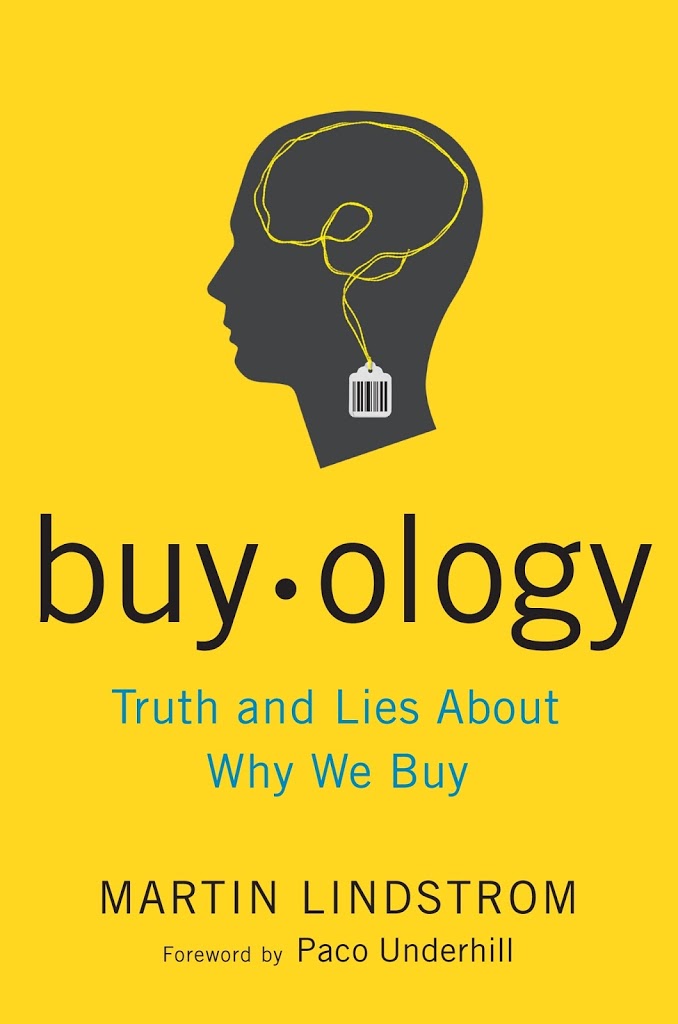
Buyology: Truth and Lies About Why We Buy
NEW YORK TIMES BESTSELLER • “A fascinating look at how consumers perceive logos, ads, commercials, brands, and products.”—Time
How much do we know about why we buy? What truly influences our decisions in today’s message-cluttered world? In Buyology, Martin Lindstrom presents the astonishing findings from his groundbreaking three-year, seven-million-dollar neuromarketing study—a cutting-edge experiment that peered inside the brains of 2,000 volunteers from all around the world as they encountered various ads, logos, commercials, brands, and products. His startling results shatter much of what we have long believed about what captures our interest—and drives us to buy. Among the questions he explores:
• Does sex actually sell?
• Does subliminal advertising still surround us?
• Can “cool” brands trigger our mating instincts?
• Can our other senses—smell, touch, and sound—be aroused when we see a product?
Buyology is a fascinating and shocking journey into the mind of today’s consumer that will captivate anyone who’s been seduced—or turned off—by marketers’ relentless attempts to win our loyalty, our money, and our minds.
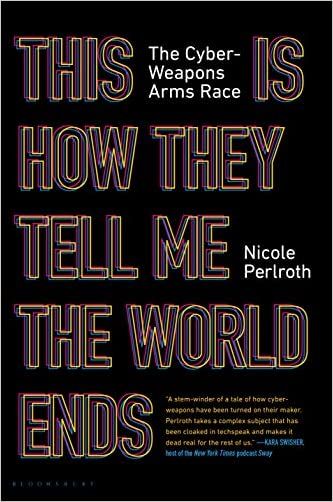
This is How They Tell Me the World Ends
THE NEW YORK TIMES BESTSELLER
WINNER of the 2021 Financial Times & McKinsey Business Book of the Year Award
“Part John le Carré and more parts Michael Crichton . . . spellbinding.” The New Yorker
“Written in the hot, propulsive prose of a spy thriller” (The New York Times), the untold story of the cyberweapons market―the most secretive, government-backed market on earth―and a terrifying first look at a new kind of global warfare.
Zero day: a software bug that allows a hacker to break into your devices and move around undetected. One of the most coveted tools in a spy’s arsenal, a zero day has the power to silently spy on your iPhone, dismantle the safety controls at a chemical plant, alter an election, and shut down the electric grid (just ask Ukraine).
For decades, under cover of classification levels and non-disclosure agreements, the United States government became the world’s dominant hoarder of zero days. U.S. government agents paid top dollar―first thousands, and later millions of dollars― to hackers willing to sell their lock-picking code and their silence.
Then the United States lost control of its hoard and the market.
Now those zero days are in the hands of hostile nations and mercenaries who do not care if your vote goes missing, your clean water is contaminated, or our nuclear plants melt down.
Filled with spies, hackers, arms dealers, and a few unsung heroes, written like a thriller and a reference, This Is How They Tell Me the World Ends is an astonishing feat of journalism. Based on years of reporting and hundreds of interviews, TheNew York Times reporter Nicole Perlroth lifts the curtain on a market in shadow, revealing the urgent threat faced by us all if we cannot bring the global cyber arms race to heel.
By: David Brown
Purchase on Amazon
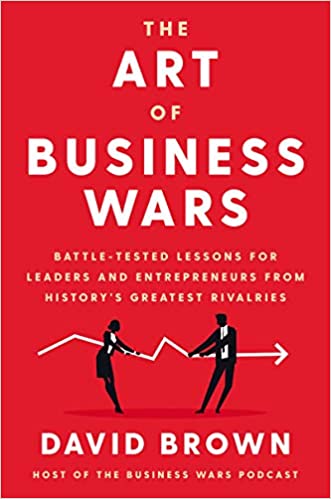
The Art of Business Wars: Battle-Tested Lessons for Leaders and Entrepreneurs from History’s Greatest Rivalries
Based on the chart-topping Business Wars podcast, stories and lessons from history’s greatest business rivalries. Using Chinese military genius Sun Tzu’s strategies as a guide, Brown examines why some companies triumph while others crumble.
Business is a fight for survival. In business as in war, leaders match their wills in pursuit of opposing outcomes, they devise strategies, and marshal resources for victory. Success can turn on the smallest of details; a single tactical blunder can topple an empire. Ultimately, one side triumphs—and victory is all that matters.
David Brown, host of the hit podcast Business Wars, masterfully frames some of the biggest business rivalries in history using revered Chinese military strategist Sun Tzu’s insights and pragmatic advice. Each rivalry he examines tells a story of combined wits, strategies, and resources. Brown chronicles the rise of companies as they vanquish rivals, formulate innovative plans, and adapt to keep up with shifting societal needs. The goal? Stay ahead of the competition and emerge victorious as an industry titan.
By compiling powerful insights uncovered over hundreds of episodes and more than a year of in-depth research, Brown has developed a formula for business intrigue that uses popular history as a hook to lure readers in. The stories in The Art of Business Wars are fascinating, but the lessons we draw from them—about determination, ingenuity, patience, grit, subtlety, and other traits that contribute to a victorious enterprise—are invaluable, whether you’re a software-slinging freelancer or the CEO of a multinational manufacturer.
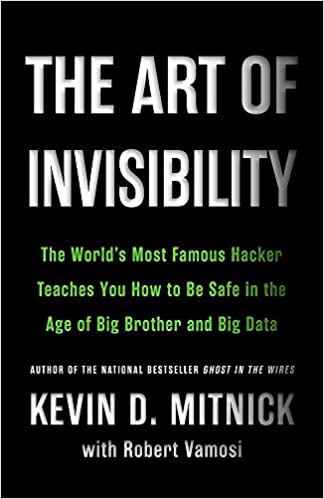
The Art of Invisibility
Be online without leaving a trace. Your every step online is being tracked and stored, and your identity literally stolen. Big companies and big governments want to know and exploit what you do, and privacy is a luxury few can afford or understand.
In this explosive yet practical book, Kevin Mitnick uses true-life stories to show exactly what is happening without your knowledge, teaching you “the art of invisibility” — online and real-world tactics to protect you and your family, using easy step-by-step instructions.
Reading this book, you will learn everything from password protection and smart Wi-Fi usage to advanced techniques designed to maximize your anonymity. Kevin Mitnick knows exactly how vulnerabilities can be exploited and just what to do to prevent that from happening.
The world’s most famous — and formerly the US government’s most wanted — computer hacker, he has hacked into some of the country’s most powerful and seemingly impenetrable agencies and companies, and at one point was on a three-year run from the FBI. Now Mitnick is reformed and widely regarded as the expert on the subject of computer security. Invisibility isn’t just for superheroes; privacy is a power you deserve and need in the age of Big Brother and Big Data.
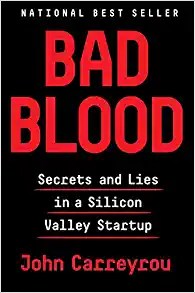
Bad Blood: Secrets and Lies in a Silicon Valley Startup
In 2014, Theranos founder and CEO Elizabeth Holmes was widely seen as the female Steve Jobs: a brilliant Stanford dropout whose startup “unicorn” promised to revolutionize the medical industry with a machine that would make blood testing significantly faster and easier. Backed by investors such as Larry Ellison and Tim Draper, Theranos sold shares in a fundraising round that valued the company at more than $9 billion, putting Holmes’s worth at an estimated $4.7 billion. There was just one problem: The technology didn’t work.
A riveting story of the biggest corporate fraud since Enron, a tale of ambition and hubris set amid the bold promises of Silicon Valley.
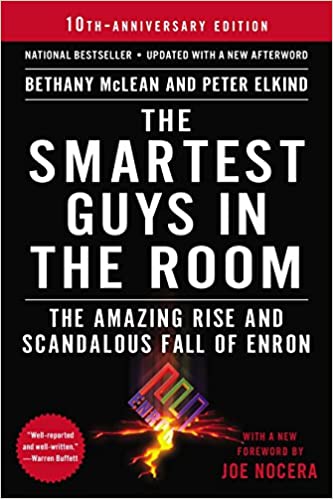
By: Bethany McLean
Purchase on Amazon
The Smartest Guys in the Room: The Amazing Rise and Scandalous Fall of Enron
The Enron scandal brought down one of the most admired companies of the 1990s. Countless books and articles were written about it, but only The Smartest Guys in the Room holds up a decade later as the definitive narrative. For this tenth anniversary edition, McLean and Elkind have revisited the fall of Enron and its aftermath, in a new chapter that asks why Enron still matters. They also reveal the fates of the key players in the scandal.
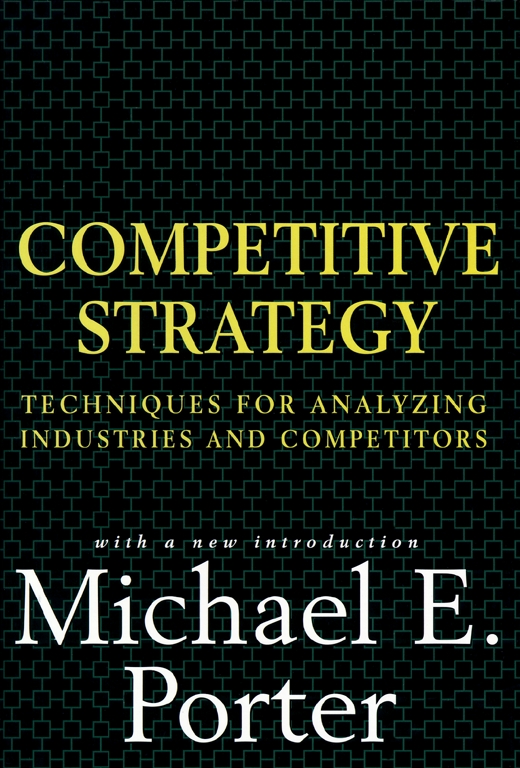
Competitive Strategy: Techniques for Analyzing Industries and Competitors
By: Michael E. Porter
Purchase on Amazon
Competitive Strategy: Techniques for Analyzing Industries and Competitors
Now nearing its sixtieth printing in English and translated into nineteen languages, Michael E. Porter’s Competitive Strategy has transformed the theory, practice, and teaching of business strategy throughout the world.
Electrifying in its simplicity—like all great breakthroughs—Porter’s analysis of industries captures the complexity of industry competition in five underlying forces. Porter introduces one of the most powerful competitive tools yet developed: his three generic strategies—lowest cost, differentiation, and focus—which bring structure to the task of strategic positioning. He shows how competitive advantage can be defined in terms of relative cost and relative prices, thus linking it directly to profitability, and presents a whole new perspective on how profit is created and divided. In the almost two decades since publication, Porter’s framework for predicting competitor behavior has transformed the way in which companies look at their rivals and has given rise to the new discipline of competitor assessment.
More than a million managers in both large and small companies, investment analysts, consultants, students, and scholars throughout the world have internalized Porter’s ideas and applied them to assess industries, understand competitors, and choose competitive positions. The ideas in the book address the underlying fundamentals of competition in a way that is independent of the specifics of the ways companies go about competing.
Competitive Strategy has filled a void in management thinking. It provides an enduring foundation and grounding point on which all subsequent work can be built. By bringing a disciplined structure to the question of how firms achieve superior profitability, Porter’s rich frameworks and deep insights comprise a sophisticated view of competition unsurpassed in the last quarter-century.
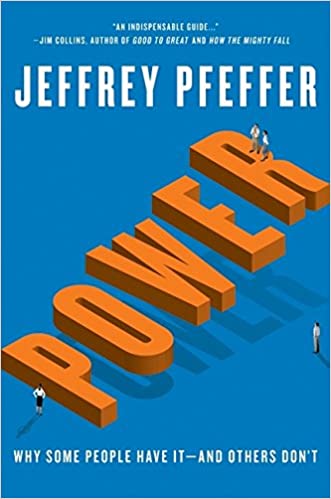
Power: Why Some People Have It – And Others Don’t
Political skill is a characteristic that can facilitate good things for individuals and their organizations. Yes, it is possible that political skill can be used and to get away with self-serving acts at the expense of others, but contrary to the stereotypical perceptions of being political, political skill is about more than manipulation. In fact, political skill enables people to build trust and forge positive relationships, and leaders often need it to influence others and access resources critical to their teams’ success.
This edition has been revised and updated with more than 15 years of additional research on political skill, as well as new examples that demonstrate why, in today’s organizations, career success depends more on political skill than on almost any other characteristic.
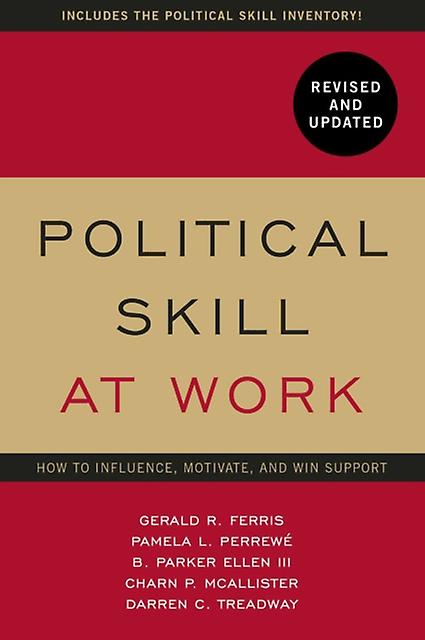
Political Skill at Work
Political skill is a characteristic that can facilitate good things for individuals and their organizations. Yes, it is possible that political skill can be used and to get away with self-serving acts at the expense of others, but contrary to the stereotypical perceptions of being political, political skill is about more than manipulation. In fact, political skill enables people to build trust and forge positive relationships, and leaders often need it to influence others and access resources critical to their teams’ success.
This edition has been revised and updated with more than 15 years of additional research on political skill, as well as new examples that demonstrate why, in today’s organizations, career success depends more on political skill than on almost any other characteristic.
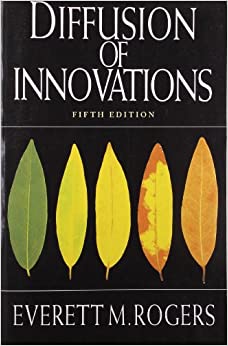
Diffusion of Innovations (5th Edition)
Now in its fifth edition, Diffusion of Innovations is a classic work on the spread of new ideas.
In this renowned book, Everett M. Rogers, professor and chair of the Department of Communication & Journalism at the University of New Mexico, explains how new ideas spread via communication channels over time. Such innovations are initially perceived as uncertain and even risky. To overcome this uncertainty, most people seek out others like themselves who have already adopted the new idea. Thus the diffusion process consists of a few individuals who first adopt an innovation, then spread the word among their circle of acquaintances—a process which typically takes months or years. But there are exceptions: use of the Internet in the 1990s, for example, may have spread more rapidly than any other innovation in the history of humankind. Furthermore, the Internet is changing the very nature of diffusion by decreasing the importance of physical distance between people. The fifth edition addresses the spread of the Internet, and how it has transformed the way human beings communicate and adopt new ideas.
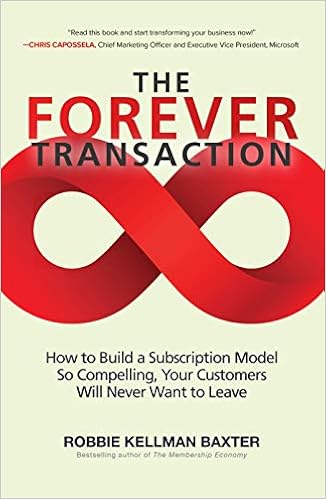
The Forever Transaction
Develop and cultivate the kind of robust, long-term customer relationships that power companies like Nike, Spotify, LinkedIn, and Target
More and more companies are concluding that the potential rewards of subscription-based products and services are worth the risk of radically changing their business models. They’re correct. The Membership Economy is here and it’s here to stay―and if you want to compete for the long run, you need to join it.
Strategy consultant Robbie Kellman Baxter has been helping companies excel in this business environment for more than a decade. Now, in The Forever Transaction, she reveals all her secrets. Whatever industry you’re in, Baxter provides the inspiration, tools, and insight you need to build and execute a business model that will leave your competition in the dust.
You’ll find out how industry leaders like Under Armour, Microsoft, and Netflix have created an ever-expanding customer base of loyal subscribers―and are keeping them coming back. You’ll learn how to lead your organization through every step of the process―from initial start-up to new product testing, scaling for long-term growth and sustainability to revamping your culture so everyone works together to optimize customer lifetime value. You’ll also master all the essentials of succeeding in the Membership Economy, like subscription pricing, Software-as-a-Service, digital community engagement, and freemium incentives as a way to turn casual browsers into cash-paying super-users.
With The Forever Transaction, you have everything you need to build durable, long-term relationships with every customer, and leverage them for ultimate business success―today, tomorrow, and forever.
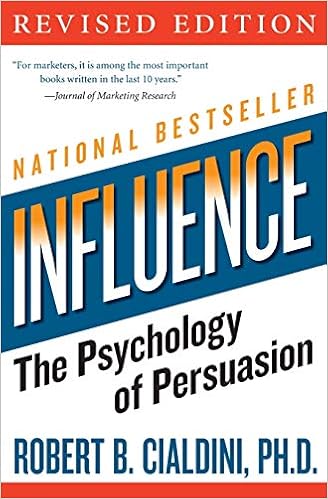
Influence: The Psychology of Persuasion
The widely adopted, now classic book on influence and persuasion—a major national and international bestseller with more than four million copies sold!
In this highly acclaimed New York Times bestseller, Dr. Robert B. Cialdini—the seminal expert in the field of influence and persuasion—explains the psychology of why people say yes and how to apply these principles ethically in business and everyday situations.
You’ll learn the six universal principles of influence and how to use them to become a skilled persuader—and, just as importantly, how to defend yourself against dishonest influence attempts:
- Reciprocation: The internal pull to repay what another person has provided us.
- Commitment and Consistency: Once we make a choice or take a stand, we work to behave consistently with that commitment in order to justify our decisions.
- Social Proof: When we are unsure, we look to similar others to provide us with the correct actions to take. And the more, people undertaking that action, the more we consider that action correct.
- Liking: The propensity to agree with people we like and, just as important, the propensity for others to agree with us, if we like them.
- Authority: We are more likely to say “yes” to others who are authorities, who carry greater knowledge, experience or expertise.
- Scarcity: We want more of what is less available or dwindling in availability.
Understanding and applying the six principles ethically is cost-free and deceptively easy. Backed by Dr. Cialdini’s 35 years of evidence-based, peer-reviewed scientific research—as well as by a three-year field study on what moves people to change behavior—Influence is a comprehensive guide to using these principles effectively to amplify your ability to change the behavior of others.
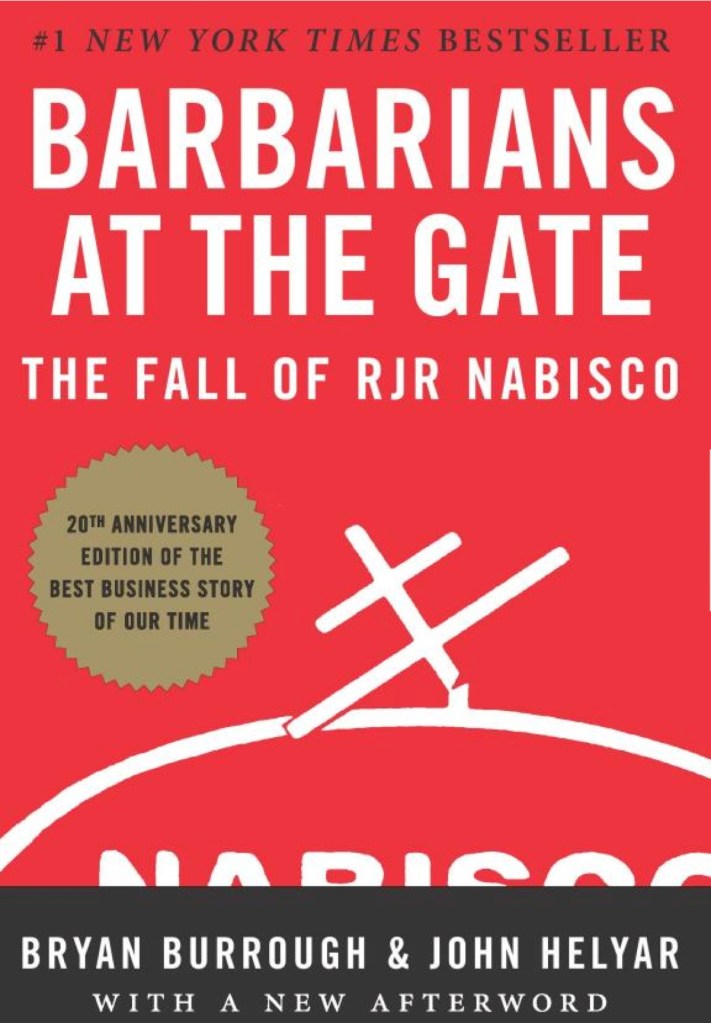
Barbarians at the Gates: The Fall of RJR Nabisco
The fight to control RJR Nabisco during October and November of 1988 was more than just the largest takeover in Wall Street history. Marked by brazen displays of ego not seen in American business for decades, it became the high point of a new gilded age, and its repercussions are still being felt. The ultimate story of greed and glory, Barbarians at the Gate is the gripping account of these two frenzied months, of deal makers and publicity flaks, of an old-line industrial powerhouse that became the victim of the ruthless and rapacious style of finance in the 1980s. Written with the bravado of a novel and researched with the diligence of a sweeping cultural history, here is the unforgettable story of the takeover in all its brutality.
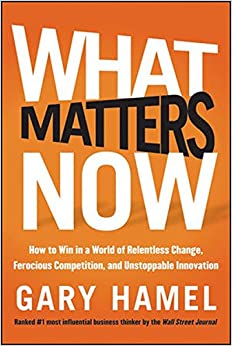
What Matters Now: How to Win in a World of Relentless Change, Ferocious Competition, and Unstoppable Innovation
This is not a book about one thing. It’s not a 250-page dissertation on leadership, teams or motivation. Instead, it’s an agenda for building organizations that can flourish in a world of diminished hopes, relentless change and ferocious competition.
This is not a book about doing better. It’s not a manual for people who want to tinker at the margins. Instead, it’s an impassioned plea to reinvent management as we know it―to rethink the fundamental assumptions we have about capitalism, organizational life, and the meaning of work.
Leaders today confront a world where the unprecedented is the norm. Wherever one looks, one sees the exceptional and the extraordinary:
Obviously, there are lots of things that matter now. But in a world of fractured certainties and battered trust, some things matter more than others. While the challenges facing organizations are limitless; leadership bandwidth isn’t. That’s why you have to be clear about what really matters now. What are the fundamental, make-or-break issues that will determine whether your organization thrives or dives in the years ahead? Hamel identifies five issues are that are paramount: values, innovation, adaptability, passion and ideology.
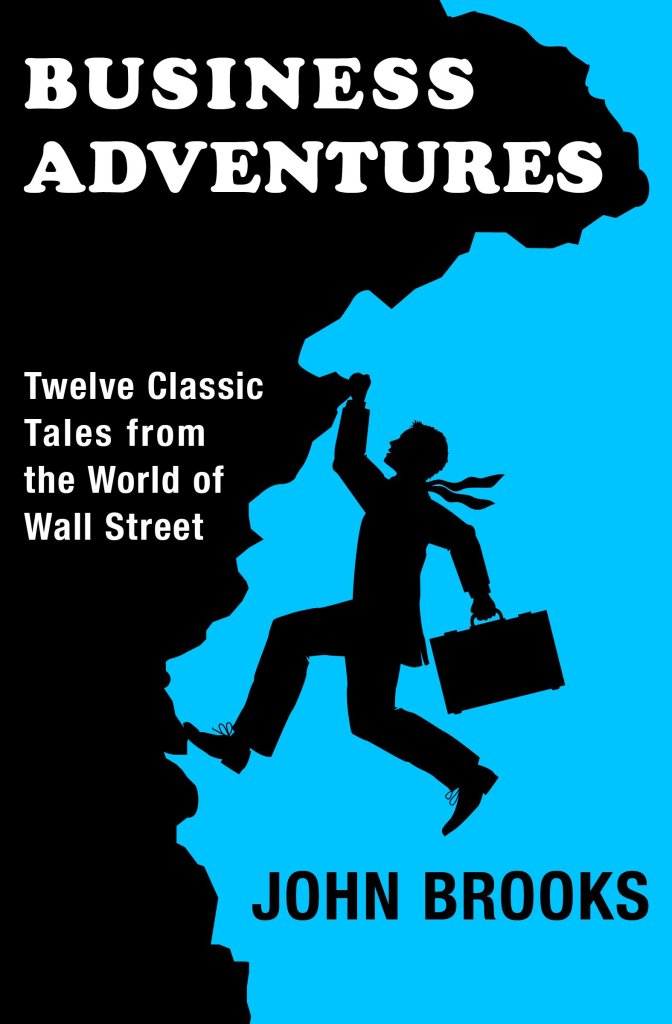
Business Adventures: Twelve Classic Tales from the World of Wall Street
By: John Brooks
Business Adventures
“Business Adventures remains the best business book I’ve ever read.” —Bill Gates, The Wall Street Journal
What do the $350 million Ford Motor Company disaster known as the Edsel, the fast and incredible rise of Xerox, and the unbelievable scandals at General Electric and Texas Gulf Sulphur have in common? Each is an example of how an iconic company was defined by a particular moment of fame or notoriety; these notable and fascinating accounts are as relevant today to understanding the intricacies of corporate life as they were when the events happened.
Stories about Wall Street are infused with drama and adventure and reveal the machinations and volatile nature of the world of finance. Longtime New Yorker contributor John Brooks’s insightful reportage is so full of personality and critical detail that whether he is looking at the astounding market crash of 1962, the collapse of a well-known brokerage firm, or the bold attempt by American bankers to save the British pound, one gets the sense that history repeats itself.
Five additional stories on equally fascinating subjects round out this wonderful collection that will both entertain and inform readers . . . Business Adventures is truly financial journalism at its liveliest and best.
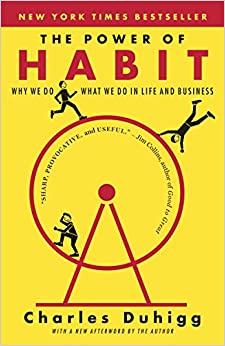
The Power of Habit: Why We Do What We Do in Business and Life
In The Power of Habit, award-winning business reporterCharles Duhigg takes us to the thrilling edge of scientific discoveries that explain why habits exist and how they can be changed. Distilling vast amounts of information into engrossing narratives that take us from the boardrooms of Procter & Gamble to the sidelines of the NFL to the front lines of the civil rights movement, Duhigg presents a whole new understanding of human nature and its potential. At its core, The Power of Habit contains an exhilarating argument: The key to exercising regularly, losing weight, being more productive, and achieving success is understanding how habits work. As Duhigg shows, by harnessing this new science, we can transform our businesses, our communities, and our lives.
 Christopher Padilla
You must be logged in to post a comment.